Volunteering at the 6 Stones Food Pantry
Earlier this month, I volunteered at 6 Stones. They gave me a job I didn't even know existed: husking corn. And I ended up staring at two boxes, one for good corn and one for bad, that told me exactly what EcoServe is really about.
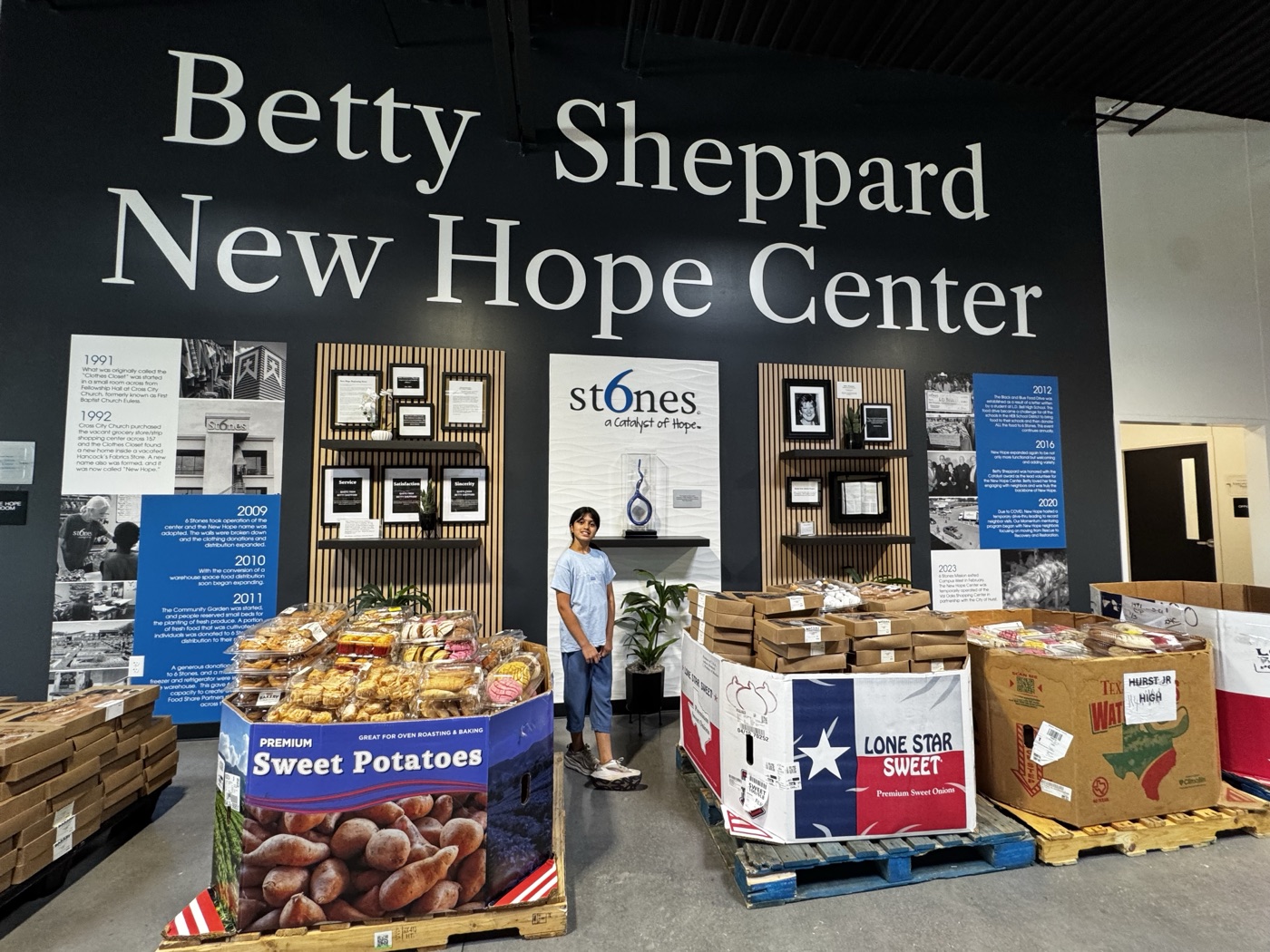
Earlier this month, I volunteered at 6 Stones.
If you’ve read my other posts, you might remember 6 Stones. A woman at the Hurst Senior Center told me about them, and I visited their office soon after to ask if I could present my project or volunteer. They said they’d get back to me about presenting, but I could volunteer right away.
The day I went, I kept imagining all the things we might do, after all, 6 Stones has by far the biggest food pantry I’ve ever seen.
A worker met us and led us to the back rooms. Inside were GIANT shelves of food stacked way above my head. Then he told us what we’d be doing: husking corn.
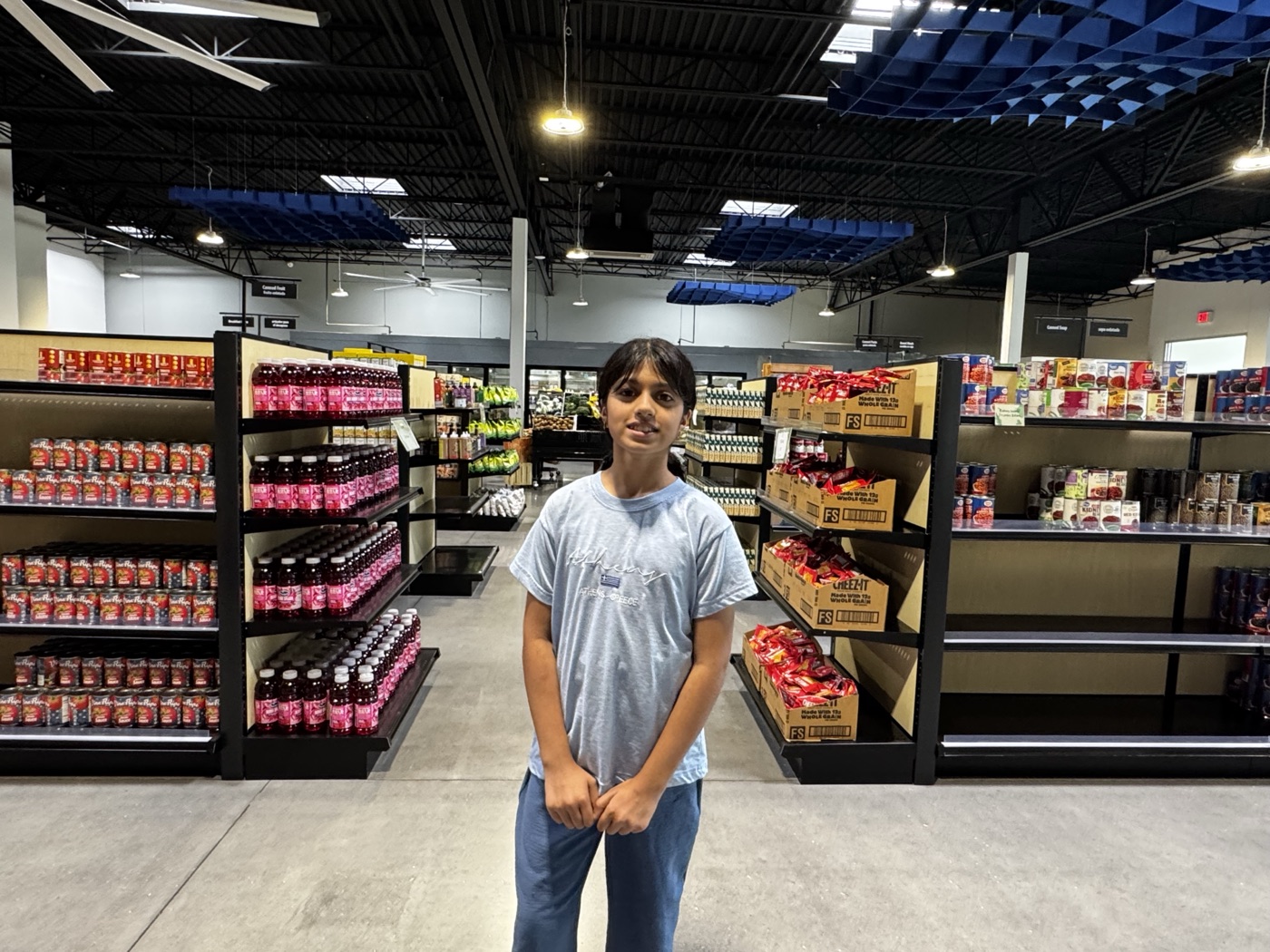
I didn’t even know what husking corn meant.
He took us to a room behind the storage room. It was pretty empty, if you don’t count the forklift and the shelves along the walls. He left for a moment and came back carrying tons of boxes of corn. Then he came back again, this time with a box of corn that had gone bad and wasn’t safe to eat anymore.
While he went to get a third box, another employee walked in, and I got to ask her the question I’d been wondering the whole time: where does all this food even come from? Every other food pantry I’ve visited wasn’t half this size.
She said they get donations from lots of stores, Walmart, Tom Thumb, but their biggest donor by far is H-E-B, the big new grocery store. H-E-B donates food six days a week. They actually tried for a seventh day, but the pantry isn’t open on Sundays, and they didn’t need that much food. So they settled for six.
Six days a week. From one store. I knew they had to be getting a lot of food, but I had no idea it was that much.
Finally the worker came back with two more boxes, both empty. He showed us the system: husks go in one box, corn goes in the other. Any bad corn would get thrown in the box with all the bad corn in it. Then he and the other worker left me to it.
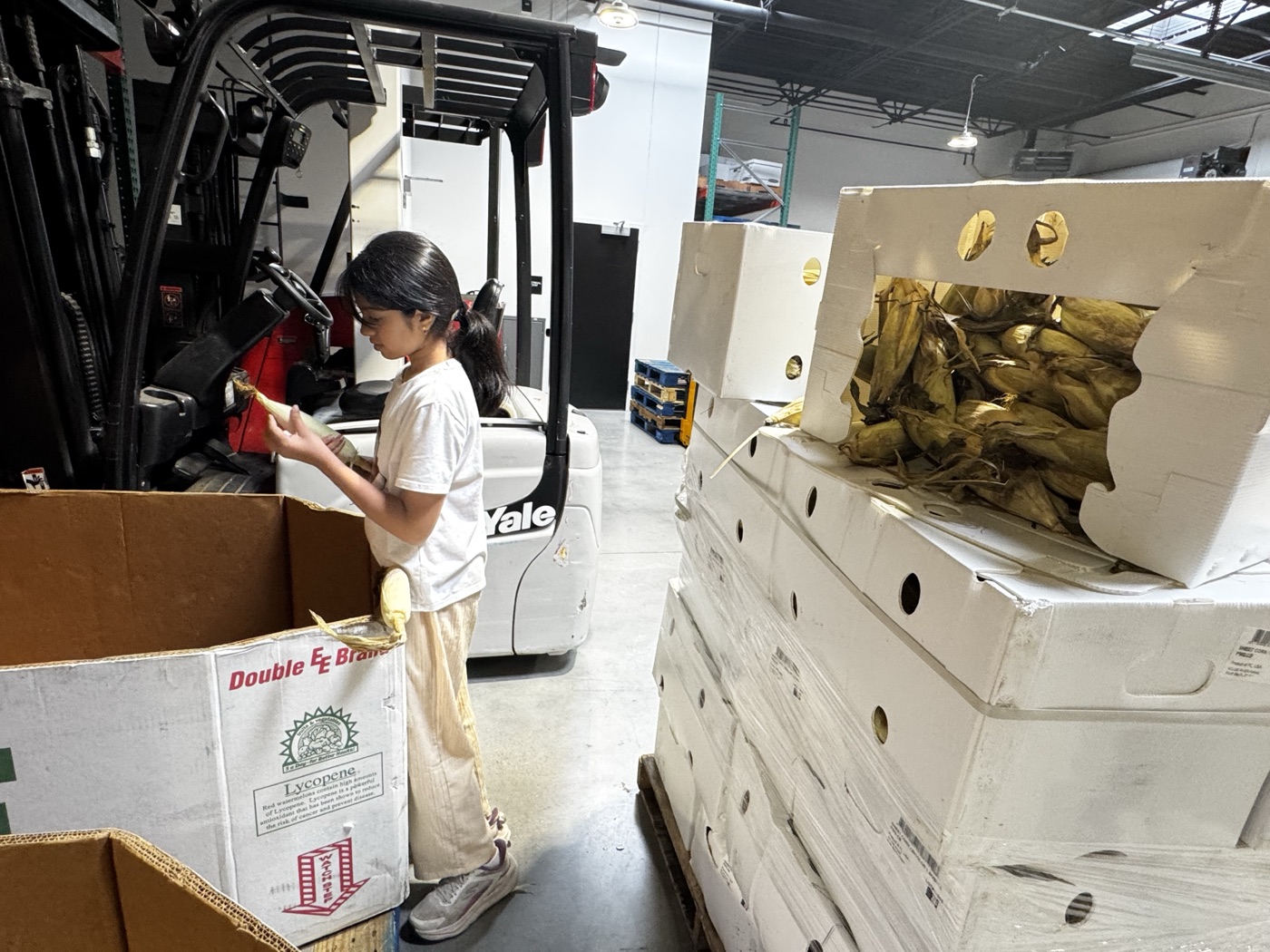
I braced myself for two long hours of husking corn and total boredom.
But right then, a boy and his mom walked in. They been sent to help husk corn too. We ended up talking and joking the whole time, and the two hours went by fast.
The two boxes
I keep thinking about those two boxes.
One box had good corn in it. One box had corn that had gone bad. And somebody had to stand there and sort them, one ear at a time, by hand.
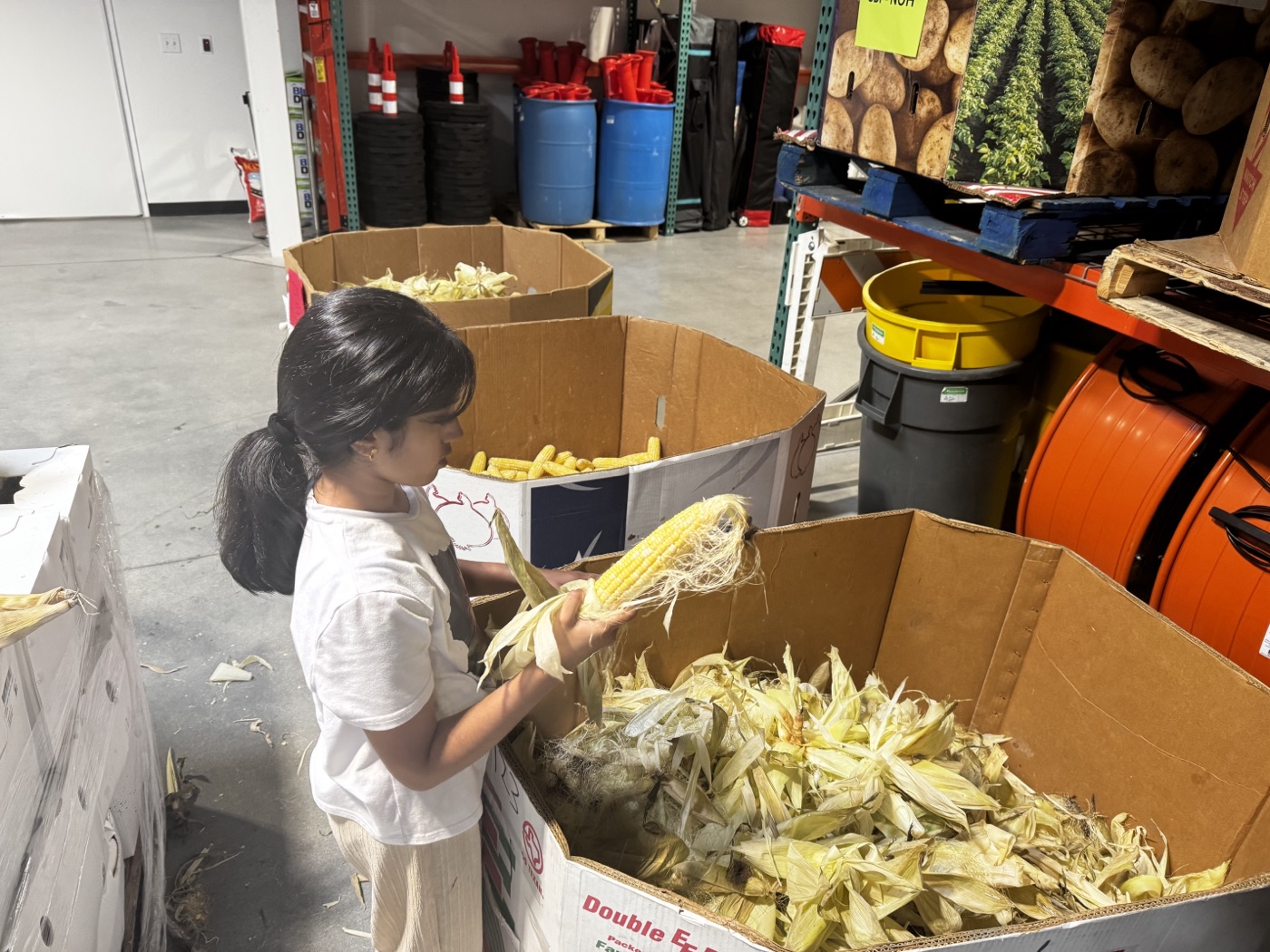
That’s the whole problem EcoServe is trying to solve right there. Right now, telling good food from bad food takes a person, their eyes, their hands, and a lot of time. Trying to skim through the corn trying to tell which ones were bad based on the outside would never work, there were some corns that looked like they were bad corn on the outside, but were actually perfectly fine on the inside. The same thing happened with corn that had a good looking exterior. People also can still get it wrong all the time, they throw away perfectly good corn, or they put bad corn in the good corn pile.
I also can’t stop thinking about H-E-B donating six days a week. That’s one grocery store, in one town. All that food was headed somewhere, and someone decided to send it to people who needed it instead of to a dumpster. That’s exactly what I want more stores to do. The reason a lot of them don’t is that they’re scared, scared the food might be bad, scared of what happens if someone gets sick. That is what my Label Decoder is for, to teach people that the expiry dates aren’t always right, and sometimes, in most cases, they’re wrong.
The best surprise of the day was the boy and his mom. I thought I’d be bored for two hours. Instead I met people, we talked the whole time, and the work flew by. That happens at almost every event I do. I show up thinking about food waste, and I leave thinking about people.
I husked a lot of corn that day. I also got a much better picture of what I’m actually working on. Thank you for reading my article!
- Sri